
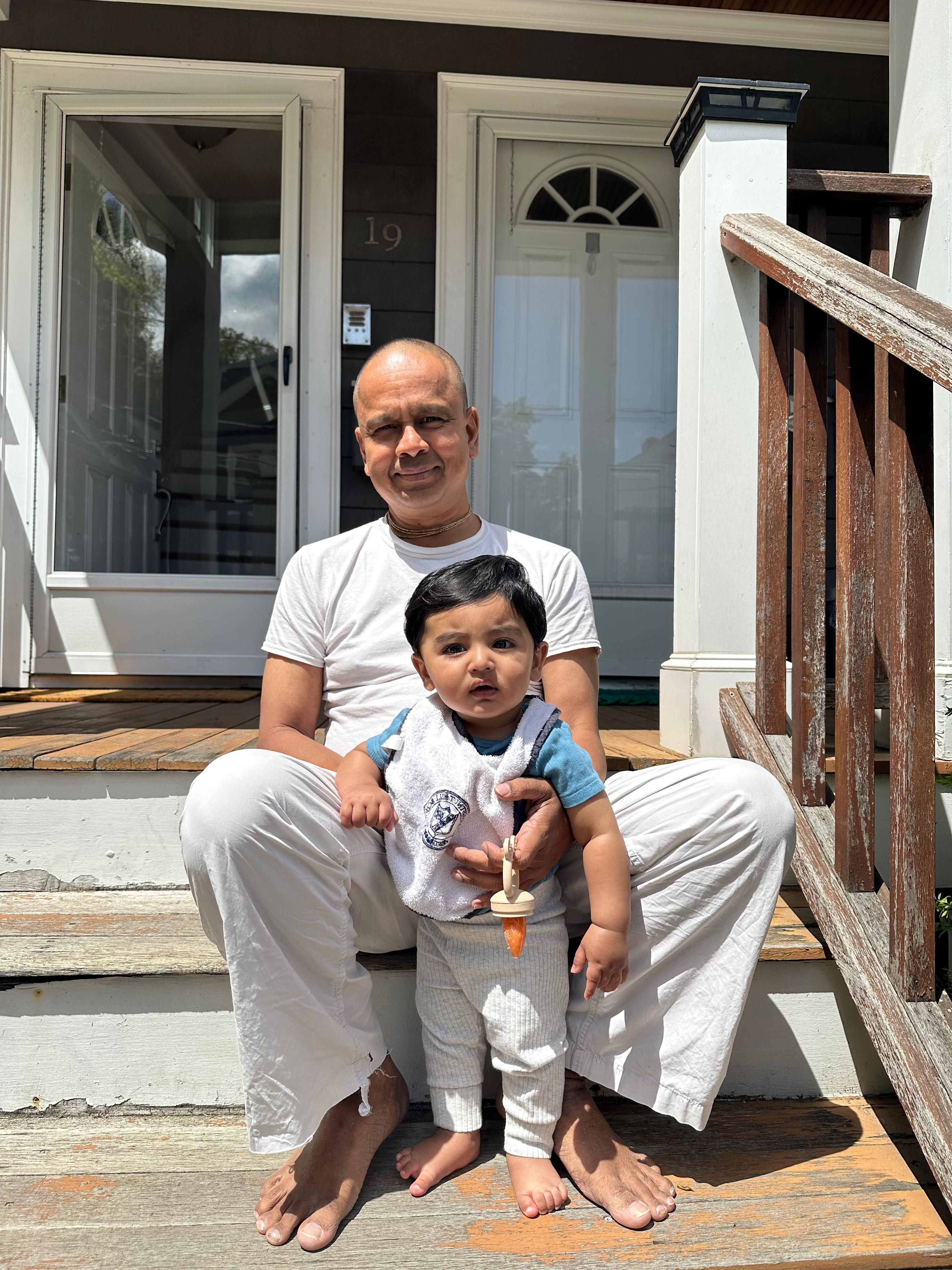
Reyansh, you are seven months old as of 16th May 2026.
You are lying on your back, looking at the ceiling fan, and you are completely absorbed. Nobody has told you yet that it is just a fan. Nobody has explained to you that the blades are made of metal, that the motor turns at a particular speed, that there is nothing especially remarkable about any of it. You do not know these things, and so you are free to watch the fan the way it actually deserves to be watched — as if something quietly miraculous is happening in your own room.
I started writing this book the day I realized you were right and the rest of us were wrong.
The fan is miraculous. The light coming through the window is miraculous. Your own small hand, opening and closing on nothing in particular, is miraculous. You know this. You have known it since the moment you arrived. The trouble is that nobody around you knows it anymore, and so, slowly, gently, year by year, we will teach you to forget. We will not mean to. We will think we are helping. We will call it growing up.
This book is my attempt to leave the bread crumbs.
I want you to be able to find your way back.
I am not writing to teach you anything, Reyansh. That is important for you to know. By the time you can read these letters, you will already have teachers — at school, in books, on screens that have not been invented yet. The world will be full of people willing to explain things to you. Some of them will be wise. Most of them will be confident, which is a different thing.
I am writing because there are things life has taught me slowly, often after I had already needed them, and I do not want you to learn them the same way. Not because I am protecting you — pain is a teacher I cannot replace — but because I would like you to recognise the shape of what is happening when it happens. A boy who knows the name of his fear is less afraid of it. A boy who has heard the word grief before grief arrives is not crushed by it; he is met by it.
I want you to be met.
Reyansh, you are the first. There will be others — cousins, brothers or sisters I cannot yet name, children whose faces I have not seen. When they read these letters one day, they should know: every word here is for them also. I am writing to you because you are the one in the room. They are not yet in the room.
You will not read this book in order. I am not even writing it in order. Some letters will be for the child you are now — small, full of wonder, not yet asking why. Some will be for the seven-year-old who suddenly understands that other children are quicker, or kinder, or better at running, and feels the first sting of comparison. Some will wait many years for you. There will be a letter you do not need until you are nineteen, and a girl has stopped answering your messages, and you are sitting on the floor of your room not knowing how a heart can hurt this much for someone you knew for so little time. That letter is already written. It will wait.
I want you to imagine, as you read, that you are not reading at all. You are sitting next to me. The fan is still turning. Tea is on the table between us. Neither of us is in a hurry. I am telling you something I once needed to hear, and you are listening the way you listen now at seven months — without defence, without correction, without the small private resistance that grown-up people put up around every sentence.
That is the only way these letters will work.
There is one more thing I should tell you before we begin, because if I do not say it now, the rest of the book will not make sense.
I see the world a particular way.
I believe — and believe is not the right word; believe is what you say when you are not sure — I have come to know that there is Someone behind all of this. Behind the fan. Behind the light. Behind your laughter, which arrives from nowhere, for no reason that any scientist will ever fully explain. Behind your mother's love, which is large in a way her body should not be able to contain. Behind the breath you are taking right now, which you did not ask for and could not produce on your own.
His name is KRISHNA.
You will hear that name many times in your life, Reyansh, and most of the time it will be said carelessly, as one word among many. I want you to know, from the first page of this book, that for your grandfather it is not one word among many. It is the word underneath all the other words. Everything I am going to write to you — about wonder, about envy, about fear, about love, about losing people you cannot live without — flows from a single quiet certainty: that you are not alone in here. You never were. You never will be.
You knew this when you arrived. You know it now, looking at the fan. The whole project of these letters is to make sure you still know it when you are forty.
I will not always speak about Him directly. Most letters will look, on the surface, like letters about ordinary things — friendship, work, money, marriage, sleep, the body, the small humiliations of being a person. That is deliberate. He is not a topic, Reyansh. He is a presence. You do not need to look at the lamp to see by its light.
But He is there in every page.
If, one day, you find yourself reading these letters and you sense that something kind is watching over the sentences — something older than your grandfather, something steadier than my voice — that is not me. That is the One I am writing toward. I am only the postman.
You are loved, Reyansh. Not for what you will become. Not for what you can do. Not for the grades you will bring home or the job you will find or the children you may one day have. You are loved the way the fan turns — without reason, without condition, without pause.
Remember that, when you forget everything else.
Vijay Gopi Keshav
— Grandfather
16-May-2026, Pune