
daivī hy eṣā guṇa-mayī mama māyā duratyayā mām eva ye prapadyante māyām etāṁ taranti te
"This divine energy of Mine, consisting of the three modes of material nature, is difficult to overcome. But those who have surrendered unto Me can easily cross beyond it." — Bhagavad Gītā 7.14
"Difficult to overcome" — most days I don't even believe that. I notice the tip of my ego: "I got irritated when corrected — that's just pride." Easy label. I nod, feel briefly humble, move on. Ego managed.
Then quiet moments come — usually alone with the holy name — and something heavier surfaces. The irritation wasn't about pronunciation. It was about protecting the story that I'm "advanced enough." This is māyā being duratyayā — not loud, not obvious, just quietly rearranging everything: why I half-listen to senior devotees, why service feels heavy when I'm proving rather than offering, why gentle correction lands like an attack instead of mercy.
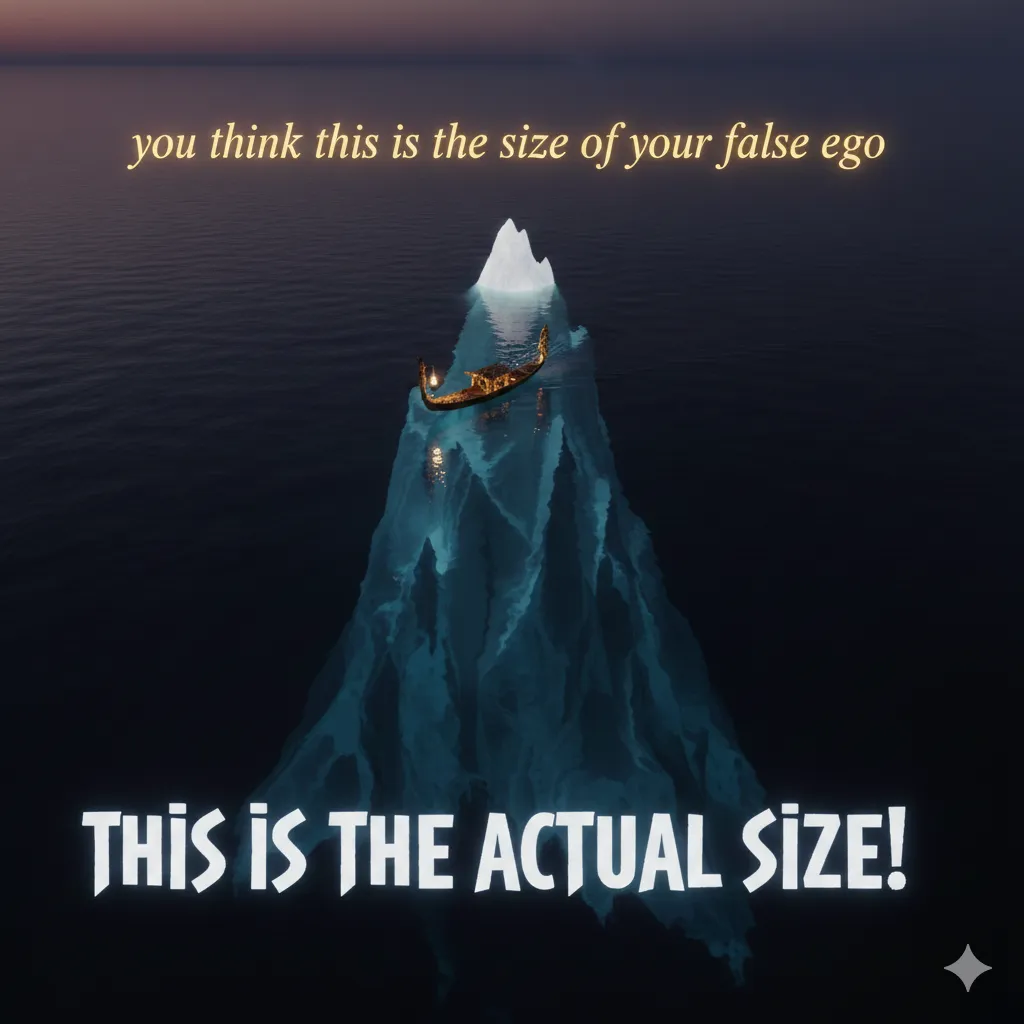
"Consisting of the three modes" — guṇa-mayī. That's what makes it so hard to spot. The iceberg below the waterline isn't just tamo-guṇa laziness or rajo-guṇa ambition. It's also sattva-guṇa self-congratulation — "I've mostly overcome this." That reassuring voice? That is the illusion. Every time I think "I've got this," I'm proving I don't.
"But those who surrender unto Me" — mām eva ye prapadyante. So what actually moves the ship? Not more analysis. Not stronger resolutions. Just surrender. But Kṛṣṇa doesn't leave us to figure out surrender alone. He sends His devotees and representatives — the ones placed in our lives precisely to show us what we cannot see ourselves. Admitting to our authorities when we've been dodging guidance, letting someone point out the blind spot without defending it, asking for help instead of pretending we're fine.
"They cross beyond it" — māyām etāṁ taranti te. That crossing doesn't start in some grand, poetic moment. It starts by surrendering to the people Kṛṣṇa has already sent us. That's where surrender actually begins — not glamorous, but real.
(And please, if you see more of my iceberg than I do… tell me. I need the mirror.)