
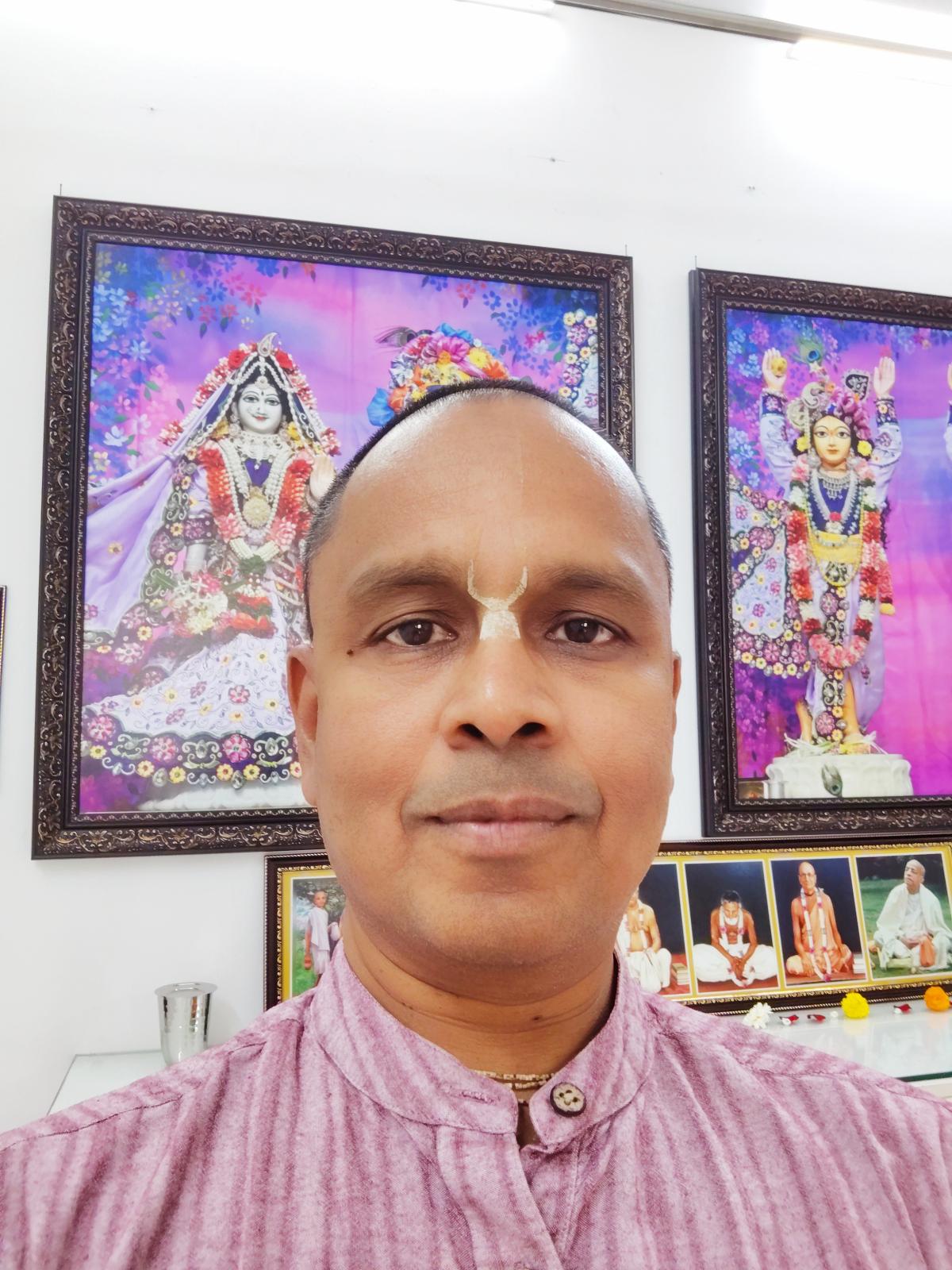
In 2008, at the peak of my IT career, I had a breakdown.
Not the kind you talk about at office coffee machines — the kind where you stop functioning entirely. Clinical depression. Psychiatric medication (Citadep 20mg one tablet daily). The works.
I could not sleep. Not "slept badly" — could not sleep. 1 AM, 2 AM, 3 AM, 4 AM, 5 AM — the whole night, staring at the ceiling, mind on a rampage, not one single minute of rest. I called in sick at work. They asked when I'd come back. I said I didn't know. I genuinely didn't.
In 2008, depression was still largely unknown in the Indian IT industry. There was no vocabulary for it. Several relatives told my mother plainly: your son has gone mad. He has become mental. My mother — already frightened by what she was seeing — had to hear that on top of everything else.
On paper, everything had been fine. BITS Pilani graduate. Six years in the United States. Good designation. Good salary. Good address. The kind of life your parents describe to relatives at weddings with visible pride.
I have two daughters. My older one could sense something was wrong but managed to absorb it in her own quiet way. My younger one was too small to understand what was happening to her father — her hero, the man who was supposed to have all the answers. The expression in her eyes during those months — confusion, fear, a child trying to make sense of why her world had tilted — I carry that with me to this day. In fact, I revisit it on purpose. Every day. It is the fuel that keeps me on the path I eventually found. It reminds me why this work matters, and why I can never go back to sleepwalking through life.
Inside, something had quietly collapsed — and I didn't have the vocabulary to explain what.
The search had actually begun much earlier.
When I returned to India from the US in 2001, something was already restless. I couldn't name it then. It showed up as questions — about existence, about purpose, about why the next promotion never made the feeling go away.
For seven years, I searched. Temples, organizations, spiritual groups, meetings. I went everywhere. And everyone had answers — but they were all different answers. Each group had its own version, its own framework, its own confident explanation for everything. Nobody's version quite held together when I pushed back with honest questions. I wasn't being difficult. I genuinely wanted to know. But the more places I visited, the more confused I got.
By 2008, the searching hadn't led anywhere, and the questions hadn't stopped. They had only gotten heavier. And then the weight became too much.
After the breakdown, my mother did what Indian mothers do during bad times. She said, "Let's go to the temple."
I usually took her to a Ganesh temple nearby (Dhole Patil Road). But that day she said, "Isn't there another temple also? That one we always drive past?"
She meant the ISKCON temple. I had driven past it every single day for years. Literally every day. And never once gone inside.
Since my mother wanted to try something different, we went in.
Inside, I met the ISKCON volunteers for the first time. I told them what I told everyone — that I had questions. Many questions. About the soul, about God, about suffering, about why nothing I'd tried in seven years had given me a stable answer.
They said something no one else had said: "We have answers. All of them. But first — do you believe in the Bhagavad Gita?"
I said yes. I had always believed in it. I never doubted the Gita — I just never followed any of it. It sat on my shelf the way it sits on most Indian shelves: respected, unread, and gathering dust.
They said, "Then start asking."
So I did. They put a Bhagavad Gita in my lap. The volunteer had one in his. And I started asking questions — and he started answering. Not vaguely. Not philosophically. Directly. Verse by verse. This went on for days. Every question I had carried for seven years, they opened the Gita and showed me where Krishna had already answered it.
Then they said something else: "The theory is one thing. But if you start chanting the Hare Krishna mantra, the understanding will move from your head to your heart. That's the real medicine."
So in 2008, I was on two medicines.
One was the psychiatric medication. The doctor had prescribed it, and it was doing what it was designed to do — keeping me functional.
The other was the Hare Krishna mantra. Nobody prescribed it. There was no dosage on the bottle. But every morning, as I sat with the beads and chanted, something shifted. Not dramatically. Not overnight. But steadily — the way dawn works. You don't see the moment it stops being dark, but at some point you realize you can see again.
By September of that year — a few months after I'd walked into that temple for the first time — I discontinued the psychiatric medication.
That was more than eighteen years ago. I haven't needed it since.
I'm not telling you this to make a medical claim. I'm telling you this because it's what happened to me. The Gita — not as philosophy, but as a living practice — put me back together when nothing else could.
But it didn't stop at putting me back together. Over the next few years, something deeper happened. The questions that had driven me to the edge — about existence, about purpose, about why success felt hollow — actually got answered. Not vaguely. Not temporarily. The restlessness that had been running in the background since 2001 went quiet. Not because I suppressed it, but because it had been addressed. For the first time in my adult life, I knew who I was, whose I was, and where I was. And once you know that, the things you chase start to change.
A few years after that, I stepped away from the IT industry entirely. I joined ISKCON as a full-time volunteer. I began learning and teaching the Bhagavad Gita — not to monks or scholars, but to software engineers, startup founders, MBA graduates, young professionals in Pune. People who looked exactly like I did in 2007: successful, sorted, and slowly falling apart on the inside.
This novel is the story of Meera Kulkarni — a twenty-seven-year-old software engineer in Pune, successful by every conventional measure, whose life comes apart when her engagement breaks down. In the wreckage of that one event, every question she had been postponing — about identity, about purpose, about what any of it means — comes rushing to the surface. And through a childhood friend and a book she never expected to open, she finds her answers in the Bhagavad Gita. This is her journey.
This novel is not my autobiography. Meera is not me. She's younger, smarter, and significantly better at comebacks.
But her question is my question. Her confusion was my confusion. And the answer she finds over the course of twenty-eight chapters is the same answer that put me back together — not the self-help version, not the WhatsApp-forward version, but the real thing, as it was spoken five thousand years ago on a battlefield to a man who had also, in his own way, stopped functioning.
I wrote this book because in 2008, I wish someone had handed me a story like this — not a lecture, not a scripture, not a twelve-step program, but a story — about someone like me, in a world like mine, who found the Gita and realized it wasn't what they thought it was.
If you're reading this and things are fine — wonderful. Enjoy the story. It's set in Pune, it has some decent jokes, and the chai references are accurate.
If you're reading this and things are not fine — if something has quietly collapsed and you don't have the vocabulary to explain what — then this book is especially for you. You're not alone. And you're not broken.
You're still here. That's where it starts.
Vijay Gopi Keshav (Vakulabharanam Gopi Krishna) is a BITS Pilani graduate (BE, Computer Science, 1992) who worked in the United States for six years (1995 to 2001) and spent twenty years in the Indian IT industry — which is why every standup meeting, deployment disaster, and Jira ticket in this novel feels uncomfortably real. He now serves as a full-time volunteer at ISKCON, Pune, where he lives with his wife and two daughters. You can find more of his work at thegitaproject.com.
Portions of this novel were drafted with the assistance of AI tools. The ideas, theological positions, and teaching framework are entirely human — born from years of classes, conversations, and study. The technology helped with pace and structure; the soul of the work comes from the paramparā.
— Vijay Gopi Keshav, Pune, March 2026